

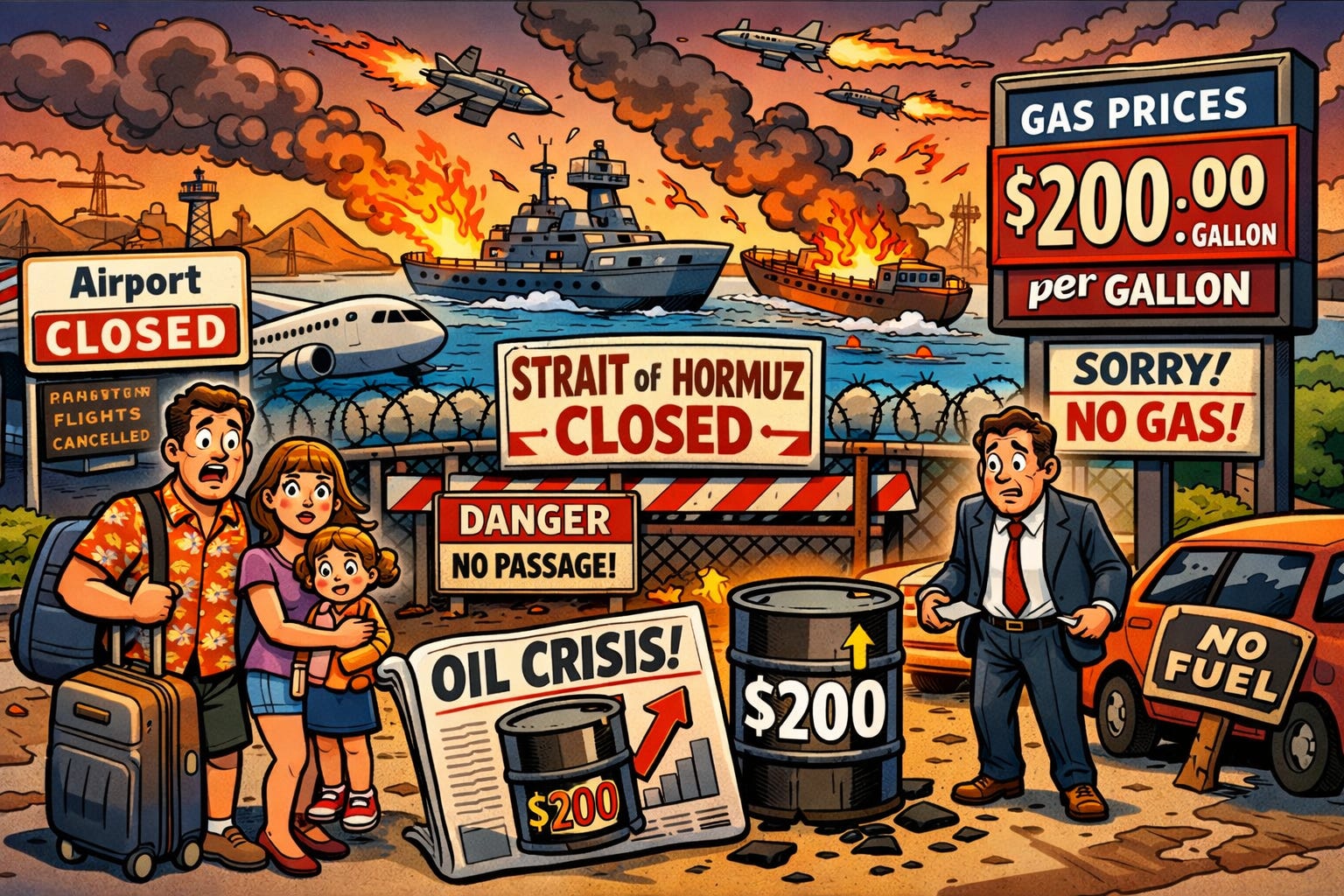


We may be on the verge of a global energy crisis unlike anything seen in decades. Early signs are already emerging. Airlines have begun cutting flights as fuel costs rise, and if ticket prices were to double, air travel would quickly become unaffordable for most people. Mobility itself would become a luxury—something reserved for those who can afford it.
This is how an “energy lockdown” begins—not through government mandates, but through economics. As fuel prices surge, people simply stop traveling because they can’t afford to. Businesses that can operate remotely will expand those policies out of necessity. Companies that rely on in-person workers will be forced to raise wages just to keep employees coming in, and those higher costs will inevitably be passed on to consumers through rising prices.
History offers a useful comparison. During the 1970s oil embargo, prices surged because supply was restricted—but the infrastructure itself remained intact. Once the embargo ended, oil flowed again and markets stabilized. Today’s situation carries a far more serious risk. If major energy infrastructure is damaged or destroyed, supply cannot simply be turned back on. Refineries, export terminals, and processing facilities take years—not months—to rebuild. What might begin as a shock could turn into a prolonged global shortage.
The consequences would not be evenly distributed. Wealthier countries may attempt to soften the blow through subsidies or financial support, but many developing nations lack those options. As energy becomes more scarce and expensive, the pressure will build fastest in the most vulnerable regions. Fuel shortages, rising costs of basic goods, and economic instability could lead to widespread unrest.
At the same time, global supply chains remain heavily dependent on energy. If disruptions continue, the effects will ripple across every sector—transportation, food production, manufacturing, and beyond. Inflation would accelerate as the cost of moving goods and producing essentials rises across the board.
Geopolitical tensions only increase the risk. Escalation or further damage to key energy infrastructure could compound supply disruptions and push markets into even greater volatility. In this environment, stability becomes fragile, and recovery becomes uncertain.
This is not just another cycle of rising prices—it is the possibility of a structural shift in how energy flows through the global economy. And if that shift takes hold, the effects will be felt everywhere.
Buy Bitcoin Miners - BitcoinCapitalist.io
Linktree - All Links